




Ministry of Environment — Continued
Goals, Objectives, Strategies and
Performance Measures
The Annual Service Plan Report affords the ministry an opportunity to publicly communicate its achievements, comparing actual results against planned results from the previous year. It is also an opportunity to demonstrate the ministry's commitment to objectivity and accountability — two of its key values — and to effective performance management.
Successful and meaningful performance management provides the impetus to achieve, underpins ministry decision-making and fosters a culture of continuous improvement. The ministry strives to select performance measures that will "raise the bar" and continue to move the province toward its goal of leading the world in sustainable environmental management.
The following sections provide an overview of each ministry goal, and present the supporting objectives, strategies and performance measures. Each performance measure includes a rationale of why that particular measure was chosen, confirms key achievements, compares actual results to planned results (reporting on variations), addresses issues and risks associated with the measure and identifies the future direction or plans for the measure. Together these performance indicators provide a picture of the ministry's continuous efforts to fulfill its mandate and achieve its vision.
New performance measures established in the February 2006/07 – 2008/09 Service Plan will be reported on in next year's Annual Service Plan Report.
Appendix F provides supplemental information on the types of performance measures the ministry has developed and why (e.g., outcome vs. output), as well as additional information on the performance measures themselves.
Goal 1
Clean and safe water, land and air
Healthy communities and a healthy environment depend on clean and safe water, land and air. This goal reflects the ministry's commitment to enhanced protection of our water resources, reduced contamination of land and air, and effective responses to climate change and environmental emergencies. Achievement of this goal is key to a healthy and sustainable environment for British Columbia, and supports the government's broader goal to have the best air and water quality in North America.
Core business areas: Water Stewardship, Environmental Protection and Compliance.
Objective 1
 Enhanced protection and stewardship of our water resources
A safe and sustainable supply of high quality water is vital to our communities, economy and environment. Both protection and stewardship of our water resources are of utmost importance to the ministry. Achievement of this objective through effective legislation, innovative approaches to water governance and coordinated watershed-based planning contributes directly to the goal and is critical to the health of British Columbians and the environment.
Strategy
A key strategy for this objective includes:
- approving and implementing the B.C. Water Strategy. Under this strategy, actions include:
- appointing a Chief Water Officer and defining accountabilities for ensuring exemplary water stewardship
- integrating cross ministry initiatives to promote and enhance water stewardship
- developing and implementing proactive planning and adaptation strategies to address emerging issues and cumulative effects (e.g., climate change, population growth)
- integrating water stewardship and long-term sustainability into local government planning and development programs
- continuing to ensure safe and secure drinking water sources through the ministry's source water protection program
- ensuring well-managed and accessible water resources information to support science based decision-making
Performance Measure
Water quality trends in water bodies monitored
under a federal/provincial agreement
| Performance Measure | 2005/06 Target | 2005/06 Actual | Variance | Target Met? |
|---|---|---|---|---|
| Trends in environmentally significant variables indicating the health of 30 water bodies monitored under a federal/provincial agreement | Maintain or improve water quality trends for water bodies monitored under the federal/provincial agreement | 96% of water bodies monitored under the federal/provincial agreement had maintained or improved water quality trends | — | Yes |
| Benchmark/Explanatory Information: | In 2004/05, 96% of the monitoring stations in the 30 water bodies have stable or improving water quality trends. In 2003/04
and 2002/03, 90% of the monitoring stations in the 30 water bodies had stable or improving water quality trends. (Source:
Ministry of Environment.) In addition to the 30 water bodies used to report water quality trends, the ministry uses water quality data from approximately 150 other community-based stations on other water bodies. By comparison, Ontario's water quality monitoring network has 390 monitoring stations operated in partnership with 30 conservation authorities. In 2000, Ontario had approximately 240 locations and 19 conservation authority partners. Ontario's water quality monitoring network has been significantly improved as part of the government's commitment to having the best science to support protection decisions. |
|||
Rationale for the Performance Measure
British Columbia has 25% of the flowing freshwater in Canada. Drinking water, water to support aquatic life, wildlife, recreation,
and industry all rely on a high water quality. This is why ongoing monitoring, protection and management of these water sources
are so important. This measure monitors trends in surface water quality based on the presence of environmentally significant
variables, such as metals, nutrients, nitrate, pH, temperature, dissolved gases and flow. The results for this measure provide
a good indication of the cumulative effects of stewardship and the programs and efforts to protect the province's water resources.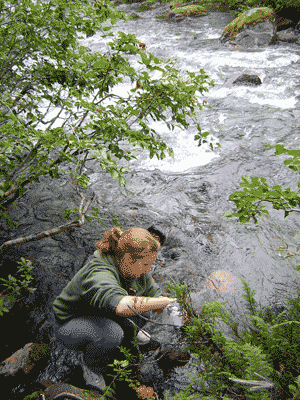 This information helps inform authorizations for water use and helps to establish further water monitoring requirements.
While there are approximately 150 additional water monitoring stations in the province, an agreement has been signed with the federal government under a Canada – B.C. Water Quality Monitoring Agreement to analyze trends in 30 water bodies. The purpose of the agreement is to provide for the coordination and integration of Canada and B.C. surface water quality monitoring activities to develop joint, cost-shared, comprehensive assessments of water quality. Water bodies included in the water quality trend analysis are identified in a three year plan agreed to by Environment Canada and the ministry. To determine which water bodies are monitored under the agreement, the ministry bases its decisions on provincial coverage, water use, alternative monitoring agencies, such as regional districts, and events or issues near water bodies that may have negative consequences to the water quality of those water bodies.
Achievements and Key Issues
The 2005/06 target was to maintain or improve water quality trends in 96% of the 30 water bodies monitored under the federal/provincial agreement. This target was met.
Water quality trends can be classed as decreasing, stable or not being at environmentally significant levels (i.e., higher than the B.C. Water Quality Guidelines, which provide the benchmarks for the assessment of water quality). All monitored water bodies maintained the quality they had in 2004. Currently, one monitored water body is experiencing an environmentally significant trend. Elk River contains levels of selenium higher than the selenium water quality guideline. This is due to expansion of nearby coal mining activities, which have selenium as a by-product. The guideline is being reviewed to ensure that it is equally applicable to both river and lake environments.
Gathering water quality data to find trends is a multi-step process. For each water quality monitoring station, data are collected every two weeks, or in some cases monthly, by trained samplers using established protocols. Once the samples have been collected, they are sent for analysis to laboratories that have been accredited by the Canadian Association of Environmental Laboratories (CAEL). Because the government does not expect to see changes in the data on a yearly basis, water quality interpreters within the federal and provincial government look at data from approximately six stations per year. Once data have been collected over a period of time, they can start looking for trends that show change in the water quality.
The accuracy of water quality data relies on accurate water sampling. Local residents living near the water bodies are well-trained by provincial or federal staff for sampling and professional safety. The water samplers are audited for technique and safety a minimum of once per year and twice if possible. Written reports on training are maintained. However, errors can still occur. Similarly, the data analysis relies upon the accuracy of the technology and interpretation of the data. These factors all represent a risk to the final analysis of water quality. Although risks cannot altogether be eliminated, updated training and technology mitigates some of the risk involved in determining water quality and approving water quality uses.
Future Direction
As discussed above, the results reported for this measure are for those water bodies monitored under the federal/provincial agreement. The ministry is in the process of expanding its monitoring program of water bodies for water quality trends. Planning is underway to increase the number of monitoring stations from 30 to 35. To ensure that resources are allocated where they are needed most, the ministry has suspended the operation of monitoring stations for stable water bodies. The ministry is planning to revisit these sites after five years to ensure that past results are still valid. However, this timing may vary, depending on interest in the particular watershed and activities that may occur near the water bodies.
Objective 2
Reduced contamination from toxins and wastes
The disposal of toxins and wastes generated each year results in significant costs. These include financial costs associated with shutting down landfills and establishing new ones, dealing with the contamination of land, water and air, and addressing the impact on ecosystems and the health of citizens. By reducing contamination from toxins and wastes efficiently and effectively, the ministry will minimize impacts to water, land, air, human health and safety, and the economy.
Strategies
Key strategies for this objective include:
- completing the 2005 Municipal Solid Waste (MSW) tracking report for baseline data
- creating a strategy to further reduce MSW such as diversion of demolition, land clearing and construction waste
- adding new products to the B.C. Recycling Regulation
- leading the development of a Brownfield9 strategy for British Columbia
- updating the Hazardous Waste Regulation
|
|
|
| 9 | Brownfields are idle or underused properties where past activities have caused environmental contamination but which, nevertheless, exhibit good potential for other uses and which provide economically viable business opportunities. |
Objective 3
Healthy air quality
Protecting the quality of the air remains a key focus of the ministry. Healthy air quality means healthy people and a healthy environment. Taking action to reduce air pollution will help improve the health of British Columbians, preserve our environment and enhance our economic competitiveness.
Strategy
A key strategy for this objective includes:
- approving and implementing the Clean Air Strategy. The actions under this strategy include initiatives such as:
- improving and increasing efforts to replace uncertified woodstoves with more efficient and approved clean-burning appliances
- identifying and improving multi-agency collaborative initiatives that bring relevant regulatory authorities, program initiatives and human resources from all levels and parts of government together to address air quality issues
- developing an Air Quality Health Index in collaboration with federal partners
Performance Measure
Air quality
| Performance Measure | 2005/06 Target | 2005/06 Actual | Variance | Target Met? |
|---|---|---|---|---|
| Percentage of monitored communities achieving the Canada-wide standard (CWS) quality objective for PM2.5and low level ozone | By 2010, 100% of communities monitored achieve, or continue to achieve, the CWS for PM2.5and low level ozone | PM2.5: 88% of communities (21 out of 24) achieved the CWS (based on 2003 – 2005 data) Low level ozone: 95% of communities (22 out of 23) achieved the CWS (based on 2003 – 2005 data) |
2010 target | 2010 target |
| Benchmark/Explanatory Information: | Comparable data for previous years are: PM2.5: 88% in 2004 (14 out of 16 communities), 87% in 2003 (13 out of 15 communities), 91% in 2002 (10 out of 11 communities), 91% in 2001 (10 out of 11 communities), and 100% in 2000 (7 out of 7 communities). Low level ozone: 96% in 2004 (25 out of 26 communities), 95% in 2003 (21 out of 22 communities) and 100% in 2002 (21 out of 21 communities).1 | |||
|
|
|
| 1 | The number of communities reported for PM2.5and low level ozone has generally increased over time. This is due to an increase in the number of monitored communities having sufficient data to generate the statistics needed to determine the CWS. The PM2.5measure is taken based on the most representative monitoring station, as selected by the regional air quality meteorologist. Similar methodologies have now been applied to the low level ozone performance measure calculation, which have resulted in a small (1%) change in the performance measure results cited for 2002, 2003 and 2004. |
Rationale for the Performance Measure
The outdoor air contaminants of most concern in British Columbia, from a human health perspective, are particulate matter (PM) and low level or ground level ozone.
Particles smaller than 2.5µm (PM2.5) are believed to pose the greatest health risk. These fine particulates, which are most often generated by combustion processes and chemical reactions that take place in the air, are easily inhaled and penetrate into the lungs, posing a threat to human health.
Although ozone in the stratosphere (the ozone layer) is beneficial and filters out harmful ultraviolet rays, ground level
ozone is a pollutant and can be damaging to human health and the environment. Ground level ozone is also a major component
of photochemical smog. Ground level ozone is a secondary pollutant, formed through chemical reactions involving nitrogen oxides
(NOx) and volatile organic compounds (VOCs) in the presence of sunlight. Nitrogen oxides and VOCs are primarily emitted during
the combustion of fuel, and VOCs from the evaporation of fuels, solvents, paints and dry-cleaning fluids, or from natural
sources such as biogenic emissions from vegetation.  Ground level ozone also occurs naturally and can come from downward mixing
from the stratosphere to the troposphere, the layer of air we live in.
Ground level ozone also occurs naturally and can come from downward mixing
from the stratosphere to the troposphere, the layer of air we live in.
The ministry, in conjunction with regional districts and industry, collects PM2.5data from approximately 80 air quality monitoring sites from over 45 communities across the province, and ozone data from approximately 30 monitoring sites from over 25 communities. The percentage of monitored communities achieving the Canada-wide standard (CWS) for PM2.5of 30 µg/m3(24 hour average)10 and the CWS for ozone of 65 parts per billion (ppb) (8-hour average)11 have been selected as the performance measure. Use of this performance measure is designed to help the ministry determine how effectively it is achieving its air quality improvement targets. As a greater number of communities meet the CWS, the better the air quality — and the cleaner and healthier the environment, which benefits British Columbians both today and in the future.
|
|
|
| 10 | Achievement is based on the annual 98th percentile value, averaged over three consecutive years. |
| 11 | Achievement is based on the annual 4th highest daily maximum, averaged over three consecutive years. |
Achievements and Key Issues
The results in the performance measurement table refer to the percentage of monitored communities that achieve the specified air quality objective. The ministry continues to work toward meeting the target by 2010. Historically, sampling efforts tended to focus on those areas experiencing air quality problems related to particulate matter. More recently, the focus has been on community-based monitoring in populated areas. As such, trend results should be interpreted carefully to determine if trends reflect actual changes to air quality, changes in the monitoring network or other factors. Based on the last three years of data (2003 – 2005), the communities of Prince George, Golden and Bear Lake exceeded the CWS for PM2.5, and Hope exceeded the CWS for ozone. Golden exceeded the CWS standard largely due to the wildfires in the summer of 2003, which had a major impact on air quality in many interior communities, including Kelowna and Kamloops.
In 2005/06, the ministry continued its efforts to support initiatives related to protecting or improving air quality in the province, including:
- providing funding and regional technical support for airshed activities in Port Alberni, the Sea-to-Sky airshed, Merritt, Kelowna, Golden, Quesnel, Williams Lake, Prince George and the Bulkley Valley-Lakes District
- continuing or initiating a number of technical studies to better inform air management decisions at the provincial or airshed level. These studies looked at:
- chemical composition of airborne particles in Golden, Kelowna and Prince George as a first step to determining their sources
- background levels of PM2.5and ozone in the province
- meteorology's role in degraded air quality
- best management practices for land use near major roadways
- seeking stakeholder input on the development of new provincial ambient air quality objectives for PM2.5and on the development of a provincial framework for airshed planning
- seeking further stakeholder input to finalize a guidance document to assist users of dispersion models
- conducting the first Canadian pilot study of the new health-based Air Quality Health Index in the following communities: Thompson and Okanagan Valleys, Vernon, Kelowna and Osoyoos and Kamloops. Partner agencies included the Ministry of Environment, Interior Health Authority, Health Canada and Environment Canada. Feedback is being used to run a province-wide pilot in 2006, which will be conducted in partnership with the Greater Vancouver Regional District.
- piloting a study examining the barriers, benefits and potential solutions around more efficient woodstove change-out programs in the Skeena Highway 16 corridor
The ministry also co-funded a number of events to share information on the effects of air pollution and actions to improve air quality, including the Fraser Basin Council's Clean Air Forum and Idle-Free BC Workshop, the BC Lung Association Air Quality and Health Workshop, and the Cowichan Green Community's Rural Air Quality Forum.
Future Direction
The ministry is working closely with other jurisdictions through the Canadian Council of Ministers of the Environment (CCME) toward improved implementation of the CWS for both of these parameters. Cooperation with other jurisdictions is essential because air emissions and air quality are trans-boundary issues. The ministry continues to support local airshed planning efforts to improve local air quality, through technical expertise, information sharing, partnership-building and resources. Such efforts support the government's priority for the "best air quality." Between major metropolitan areas of similar size and population, Vancouver is ranked second in Canada with respect to its air quality. The government's 2015/16 target for PM2.5concentrations in major metropolitan areas is to achieve first place.
Objective 4
Effective responses to climate change
Climate change is an issue that has both local and global significance. All jurisdictions, including British Columbia, have a role to play in reducing these emissions. B.C. is also seeing some amount of warming and climate-related impacts. The ministry is the lead agency for the provincial government's response to climate change, which includes the reduction of provincial greenhouse emissions ("mitigation"), as well as preparation for climate change and related extreme weather ("adaptation").
Strategies
Key strategies for this objective include:
- leading B.C.'s response to climate change — coordinating and reporting on government implementation of Weather, Climate and the Future: B.C.'s Plan
- implementing climate change mitigation actions that are outlined in Weather, Climate and the Future: B.C.'s Plan
- implementing climate change adaptation actions that are outlined in Weather, Climate and the Future: B.C.'s Plan
Performance Measure
Greenhouse gas emissions
| Performance Measure | 2005/06 Target | 2005/06 Actual | Variance | Target Met? |
|---|---|---|---|---|
| Per capita greenhouse gas (GHG) emissions relative to other provinces | Maintain or improve on ranking | 3rd lowest emissions per capita in Canada (based on 2003 data) | — | Yes |
| Benchmark/Explanatory Information: | Data for 2004 will be available later in 2006. For 2003, 2002 and 2001, B.C. had the 3rd lowest per capita greenhouse gas emissions behind Prince Edward Island and Quebec. (Source: Environment Canada. Canada's Greenhouse Gas Inventory 1990 – 2003). B.C.'s two largest GHG contributors are transportation (38.2%)1 and stationary sources (31.7%).2 | |||
|
|
|
| 1 | Transportation sources include those from domestic aviation, road transportation (various types and variously fueled vehicles), railways, domestic marine traffic and off road travel. The 38.2% figure does not include pipelines. |
| 2 | Stationary sources are defined as those originating from electricity and heat generation, fossil fuel industries, mining, manufacturing industries, construction, commercial and institutional, residential, and stationary agriculture and forestry sources. |
Rationale for the Performance Measure
Elevated levels of greenhouse gas (GHG) in the atmosphere are causing changes to global climates and climate-sensitive physical and biological systems. Reducing emissions on a worldwide scale is expected to slow the rate of climate change and thus the timing of the impacts.
The ministry continues to use this performance measure of "Per capita greenhouse gas (GHG) emissions relative to other provinces." It is more appropriate than a measure of total GHG emissions in British Columbia because a per capita measure accounts for the largely unknown effects of future GHG commitments and clean technology development that are likely to apply to all provinces. The target of maintaining or improving on the province's current ranking of third lowest emissions per capita in Canada reflects British Columbia's commitment to keeping pace with, or exceeding, the national effort to reduce greenhouse gas emissions. However, to combat the negative effects of GHG emissions and to ensure B.C. has the best air quality, it is necessary to improve on the current ranking. Less GHG emissions mean better environmental quality and ultimately a higher quality of life for British Columbians.
Achievements and Key Issues
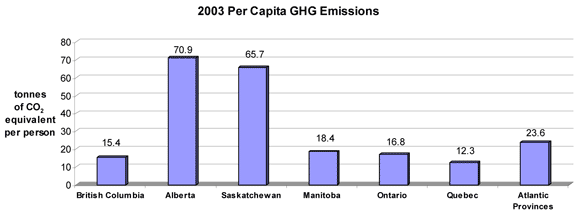
The target was met. Figure 2 shows that British Columbia continues to maintain its ranking of third lowest GHG emissions per capita compared to other provinces (based on 2003 data).12
 In May 2006, the ministry received data from Environment Canada that reflects greenhouse gas emissions data for the period
1990 to 2004. These data indicate a new ranking of second place for B.C., relative to the greenhouse gas emissions of other
provinces. However, this report included a number of significant changes to the methodology under which GHG inventories are
prepared. Consequently, GHG emissions for each province for the period from 1990 to 2004 have been reassessed. This may have
implications for B.C.'s ranking. Although these new data are now available to the ministry for analysis, the process of drawing
conclusions is not yet complete. This information will be included in the next service plan.
In May 2006, the ministry received data from Environment Canada that reflects greenhouse gas emissions data for the period
1990 to 2004. These data indicate a new ranking of second place for B.C., relative to the greenhouse gas emissions of other
provinces. However, this report included a number of significant changes to the methodology under which GHG inventories are
prepared. Consequently, GHG emissions for each province for the period from 1990 to 2004 have been reassessed. This may have
implications for B.C.'s ranking. Although these new data are now available to the ministry for analysis, the process of drawing
conclusions is not yet complete. This information will be included in the next service plan.
The ministry continues to work hard to achieve the objectives set out in the government's Weather, Climate and the Future: B.C.'s Plan.13 This plan responds to and protects the interests of British Columbia. It builds upon the significant investments already made in clean energy, infrastructure and forestry and is accompanied by actions already underway to adapt to challenges presented by the mountain pine beetle, forest fires and drought. The list of 40 actions contained in the plan is supported by specific emissions and targets for agriculture, buildings, government operations and other sectors. While government plays an important role in the development of policy options, industry sectors have a more direct role in making business decisions that can help mitigate climate change. Addressing climate change is a joint effort that requires the involvement of all stakeholders.
|
|
|
| 12 | Environment Canada. Monitoring, Accounting and Reporting on Greenhouse Gases. Available at http://www.ec.gc.ca/pdb/ghg/ghg_home_e.cfm. |
| 13 | B.C. Ministry of Water, Land and Air Protection. Weather, Climate and the Future: B.C.'s Plan. December 2004. Available at http://www.env.gov.bc.ca/air/climate. |
Figure 2. Per capita greenhouse gas emissions by province
Future Direction
Ongoing efforts coupled with new initiatives by several provincial agencies, and by numerous other provincial stakeholders, will continue to mitigate greenhouse gas emissions and manage the risks associated with climate change impacts. For example, the Province of British Columbia has invested $4.4 million in clean energy and fuel cell research in the past two years to promote the development of clean energy.
Other Canadian jurisdictions provide good points of comparison against which B.C. can be compared. However, GHG emissions know no boundaries. British Columbia's performance against other jurisdictions of geographic proximity such as Washington State and Oregon can provide insight into how well B.C. is doing in regard to its GHG emissions. For example, B.C. currently produces more GHG emissions per capita than Oregon, but less than Washington State. Because the government's strategic plan states a 2015/16 target that calls for an improvement in B.C.'s ranking, it may be appropriate for B.C. to be evaluated against better performing jurisdictions (i.e., jurisdictions with lower GHG emissions per capita), such as Quebec and the state of Oregon.
Objective 5
Effective management of environmental risks
Activities and events that occur in the environment, such as oil spills and flooding, can present risks to public health and safety, property and the environment itself. Although not all environmental risks are avoidable, effective management means that impacts from risks can be minimized. The ministry anticipates, responds to and manages the consequences of risks to the environment.
Strategies
Key strategies for this objective include:
- responding effectively to high risk environmental emergencies such as oil spills, hazardous material spills and gas leaks
- developing a strategy to enhance partnerships for environmental stewardship in spill responses
- reducing the risk to public safety through effective flood hazard management (working with local governments), drought management and dam safety programs
Goal 2
Healthy and diverse native species and ecosystems
Healthy and diverse native species and ecosystems provide significant environmental, social and economic benefits to British Columbia and its people. To achieve this goal, the ministry develops, manages, regulates and enforces environmental programs and legislation that contribute significantly to ensuring the health and diversity of native species and ecosystems.
Core business areas: Environmental Stewardship, Oceans and Marine Fisheries and Compliance.
Objective 1
Well-managed and accessible information on species and ecosystems
The collection, storage, management and distribution of scientific information on native species and ecosystems provides for effective research, contributes to the understanding of the status of native species and ecosystems and is critical to making informed decisions.
Strategies
Key strategies for this objective include:
- compiling, consolidating, analyzing and distributing information on species and ecosystems
- providing the conservation status of species and ecosystems
- providing guidelines and standards for the protection and conservation of species and ecosystems, including monitoring and reporting on achievements
Objective 2
Well-maintained parks and protected lands
Parks and protected lands have great conservation value and provide a place for native species to exist in their natural environment.  The designation of parks and protected lands means these areas will be preserved for future generations
and demonstrates British Columbia's commitment to the conservation of native species and ecosystems.
The designation of parks and protected lands means these areas will be preserved for future generations
and demonstrates British Columbia's commitment to the conservation of native species and ecosystems.
Strategies
Key strategies for this objective include:
- continuing to identify, design, designate and secure parks and protected lands
- undertaking parks and protected lands planning and management to ensure long term conservation
- maintaining and promoting partnerships for securing and managing parks and protected lands
Objective 3
Protected, maintained and restored native species and ecosystems
British Columbia is home to a rich diversity and abundance of native species and habitats. Programs within the ministry conserve biodiversity, maintain and enhance native ecosystems and achieve a balance between the needs of wildlife and the needs of the people. The ministry encourages others to accept a greater role in environmental stewardship and facilitates community initiatives to protect and restore local environments.
Strategies
Key strategies for this objective include:
- improving cumulative impact assessment processes14
- continuing to work with and expand partnerships, including those with First Nations, to identify, protect and restore species and ecosystems
- developing a responsive resource assessment and management strategy that builds capacity to manage fish and wildlife populations and ecosystems
- developing guidelines and standards for protection and conservation of species and ecosystems
- developing and implementing an enhanced legal and policy framework and regional-based planning programs
- providing scientific advice to decision-makers and implementers of resource use policies and land use planning
- providing leadership in species at risk ranking and designation, and preparing and implementing recovery plans
- developing and implementing a provincial policy that balances water flow requirements for species, ecosystems, communities and industrial needs
- leading, in collaboration with the federal government, the development of a marine protected area system for the Pacific coast
|
|
|
| 14 | An approach where all activities occurring on the land base are studied and the overall impact is determined. |
Performance Measure
Number of completed designations under the Forest and Range Practices Act
| Performance Measure | 2005/06 Target | 2005/06 Actual | Variance | Target Met? |
|---|---|---|---|---|
| Number of completed designations by the Ministry of Environment under the Forest and Range Practices Act, including Wildlife Habitat Areas, Ungulate Winter Ranges, and Fisheries Sensitive Watersheds | An additional 30 WHA and 15 UWR designations approved | 94 approved WHAs (10,125 hectares) 7 approved UWRs* (373,890 hectares) |
64 more WHAs approved than targeted 8 less UWRs approved than targeted |
WHA target exceeded UWR target not met |
| Benchmark/Explanatory Information: | As of March 31/05, there were 320 Wildlife Habitat Area (WHA) designations approved (covering 658,935 hectares) and 28 Ungulate
Winter Range (UWR) * designations approved (covering 2,284,917 hectares). The baseline for Fisheries Sensitive Watersheds
(FSW) will be established at year-end 2005/06. As of March 31, 2004, there were 160 WHA designations approved (covering 49,120
hectares) and 15 UWR designations approved (covering 913,462 hectares). As of March 31, 2003, there were 129 WHA designations
approved (covering 44,233 hectares) and no UWR designations approved. (Source: Ministry of Environment.) * Specifies the number of UWR packages; each package may have as few as 1 to more than 1,000 winter ranges. Thus, when monitoring progress in this area, it is important also to consider the amount of area designated. |
|||
Rationale for the Performance Measure
Designations under the Forest and Range Practices Act(FRPA) provide special management for species impacted by forest and range activities on Crown land. These designations provide legislated protection for habitats and contribute significantly to the conservation of native species.
Because the FRPA is a critical piece of legislation for protecting and restoring species and their habitats, it is important to measure ministry progress in establishing environmental standards under the FRPA. The ministry is assessing its progress by monitoring the number of legal designations for Wildlife Habitat Areas (WHA), Ungulate Winter Ranges (UWR) and, starting in 2006/07, Fisheries Sensitive Watersheds (FSW).15 FSW designations will provide valuable protection to fish in some of B.C.'s watersheds that are most sensitive to forest and range activities.
|
|
|
| 15 | For more information, see the B.C. Ministry of Environment, Environment Stewardship Division, Fisheries Sensitive Watersheds at http://www.env.gov.bc.ca/wld/fsw/. |
Achievements and Key Issues
In 2005/06, an additional 94 WHAs were designated for a total of 414 (covering 668,424 hectares), exceeding the target of
an additional 30 designations. As well, 7 UWRs were designated for a total of 35 UWRs (covering 2,658,725 hectares). The target
for UWRs was not achieved largely because of delays in consultation.  A number of the plans scheduled for 2005/06 will be considered
for approval early in the 2006/07 fiscal year, which should put the ministry back on track to meet its target for this performance
measure.
A number of the plans scheduled for 2005/06 will be considered
for approval early in the 2006/07 fiscal year, which should put the ministry back on track to meet its target for this performance
measure.
A risk to achieving the ministry's target is the level of funding available for these designations. Targets are based on expected levels of funding from the Forest Investment Account and other funding sources, and provide only a count of the number of designations. The size of the designations will vary depending on the species involved.
In addition, 17 FSWs were designated under the FRPA. These values were not included in the 2005/06 targets; however, they will provide a benchmark for 2006/07.
Future Direction
The ministry will continue working to establish designations and objectives in all areas for which the ministry has responsibility under the FRPA. The ministry will also work to develop a long-term outcome measure and acquire trend data. Once designations are established, the ministry's focus will be on monitoring and reporting.
Goal 3
British Columbians understand that they share responsibility for the environment
Environmental sustainability can neither be created by governments nor imposed by public policy. It depends on the collective knowledge, commitment and actions of individuals, organizations, communities and all levels of government as a whole. Achievement of this goal requires strong and expanded partnerships with industry and stakeholders, and an environmentally conscious and knowledgeable public. Having a society in which individuals act as stewards by considering the environmental impacts of their individual and collective actions will be a great step toward sustainability.
Core business areas: Environmental Stewardship, Water Stewardship, Environmental Protection, Oceans and Marine Fisheries, Compliance, Executive and Support Services.
Performance Measure
Municipal solid waste disposal
| Performance Measure | 2006/07 Target | 2006/07 Actual | Variance | Target Met? |
|---|---|---|---|---|
| Municipal solid waste (MSW) disposal (kilograms/capita) | Baseline data to be collected for the 2005 MSW tracking report | N/A — New performance measure — to be reported on in the 2006/07 Annual Service Plan Report | N/A | N/A |
Rationale for the
Performance Measure
This is a new performance measure as of February 2006. Municipal solid waste (MSW) disposal is a goal level performance measure that demonstrates the commitment by businesses and the public to reduce their impacts on the environment. In 2006/07, activities will include collecting data for the 2005/06 baseline, and scoping and analysis to determine achievable targets for inclusion in future service plans.
Objective 1
British Columbians understand the benefits of healthy living and the effect of their actions on the environment
In order for a society to become environmentally conscious, its citizens must understand the relationship between their actions and how those actions directly impact their health, the quality of their lives, and the lives of other people and species with which they share ecosystems. As British Columbians continue to make the connection between actions and impacts, they are much more likely to take on the role of stewards and demand a much higher environmental standard for their own actions and those of others.
Strategy
A key strategy for this objective includes:
- exploring and developing a comprehensive and integrated ministry stewardship outreach strategy
Objective 2
Shared stewardship
Public and stakeholder expectations of meaningful involvement in decision-making and in sharing responsibility for environmental outcomes continue to be a force for change in the way the ministry does its business. The ministry recognizes that a successful shared stewardship model needs to integrate cooperative and collaborative partnerships across all sectors and geographic jurisdictions. Necessary tools include sharing information and knowledge, consultation and partnering opportunities.
Strategies
Key strategies for this objective include:
- effectively communicating and sharing knowledge through consultative processes that engage stakeholders
- enhancing and promoting shared stewardship through partnership and volunteer programs, environmental awards and the creation of a stewardship network
- designing and developing legislation, regulations, policies and guidelines that are publicly accessible, consultation driven and client focused
- promoting collaborative management and decision-making processes for resource use
- pursuing opportunities for the Conservation Officer Service to provide compliance and enforcement activities through partnerships with other agencies
Performance Measure
Number of partnerships with First Nations
| Performance Measure | 2005/06 Target | 2005/06 Actual | Variance | Target Met? |
|---|---|---|---|---|
| Number of Collaborative Management Agreements and Regional Fish and Wildlife Advisory Processes with First Nations | 2 new Collaborative Management Agreements or Official Wildlife Processes per year | 2 agreements negotiated and signed | — | Yes |
| Benchmark/Explanatory Information: | There were 20 Collaborative Management Agreements in place with First Nations as of year end 2005/06. As of 2004/05, there were 15 Parks Collaborative Management Agreements and 5 Regional Fish and Wildlife Advisory Processes. In 2003/04, there were 14 Parks Collaborative Management Agreements and 2 Official Wildlife Processes with First Nations. In 2002/03, there were 12 Parks Collaborative Management Agreements and 2 Official Wildlife Processes with First Nations. (Source: Ministry of Environment.) Currently, 115 of 198 bands (representing 58% of British Columbia's First Nations bands) are engaged in Parks Collaborative Management Agreements and/or Regional Fish and Wildlife Advisory Processes with the ministry. | |||
Rationale for the Performance Measure
Partnerships are an important mechanism for a shared-stewardship approach to protecting the environment and fish and wildlife. The ministry has developed this measure to monitor its progress in developing partnerships with First Nations that help build government-to-government relationships between First Nations and the ministry.
Parks Collaborative Management Agreements with First Nations define how the province and First Nations will work together to manage B.C.'s parks and protected areas. Parks Collaborative Management Agreements can be developed at the request of First Nations who are interested in taking a more active role in the management of B.C. parks and protected areas. These agreements may also be developed as part of treaty negotiations or other First Nation-related provincial initiatives, or as part of the creation of new protected areas under land use plans.
Regional Fish and Wildlife Advisory Processes typically include the participation of a number of First Nations who work with the ministry on a government-to-government basis to address issues of mutual interest relating to the collaborative management of fish and wildlife. This measure was slightly changed between the September 2005/06 – 2007/08 Service Plan Update and the February 2006/07 – 2008/09 Service Plan. "Official Wildlife Processes" are now referred to as "Regional Fish and Wildlife Advisory Processes."
Achievements and Key Issues
The target has been met. Two Fish and Wildlife Advisory Process negotiations were formally signed off and one Parks Collaborative
Management Agreement has been finalized and is being signed in May 2006.  This additional agreement will bring the total number
of Collaborative Management Agreements in place to 21, with another 25 Collaborative Management Agreements in draft stage.
This additional agreement will bring the total number
of Collaborative Management Agreements in place to 21, with another 25 Collaborative Management Agreements in draft stage.
The ministry has initiated negotiations with several First Nations on new Collaborative Management Agreements, and has continued negotiations on the development of numerous additional potential agreements. It is important to note that in some of these cases the negotiations surrounding Collaborative Management Agreements are time consuming and require a great deal of communication on the part of both the ministry and First Nations on a number of sensitive issues. As a result, the sign-off on some agreements takes much longer than originally anticipated. In addition, in some areas of the province, the ministry and First Nations are communicating about fish and wildlife issues in a new way that focuses on areas of mutual interest rather than on individualized positions. In these cases, the actual negotiation process is a vital part of the relationship-building process that is almost as important as a signed agreement itself.
Future Direction
The ministry has reviewed the current process for initiating and establishing Fish and Wildlife Advisory Processes and is in the process of formalizing recommendations for the development and implementation of new agreements. The ministry is also reviewing its signed Parks Collaborative Management Agreements to determine gaps and address emerging issues of concern for First Nations and regions.
The ministry may consider establishing new targets for the measure of these advisory processes.
Objective 3
Industry and client groups are knowledgeable and implement best environmental management practices
British Columbia continues to enjoy expanding economic opportunities. More and more, industry, organizations and other ministry client groups understand the benefits of incorporating environmental values and best practices into their decision-making processes and activities. Good environmental management practices not only protect the environment, and greatly reduce costs (e.g., use resources and energy more efficiently, reduce waste and reduce discards in marine fisheries), they also set the foundation for good corporate citizenship.
Strategies
Key strategies for this objective include:
- developing stewardship programs to mitigate environmental impact from product production to disposal
- providing resource information to facilitate shared responsibility and partnerships
- encouraging compliance by reporting those in non-compliance and those exceeding environmental standards
Performance Measure
Industry-led product stewardship
| Performance Measure | 2005/06 Target | 2005/06 Actual | Variance | Target Met? |
|---|---|---|---|---|
| Number of product categories with industry-led product stewardship programs | 1 additional product category | 2 additional product categories added to the B.C. Recycling Regulation; stewardship programs under development | — | On track |
| Benchmark/Explanatory Information: | British Columbia is a recognized leader in industry product stewardship with 9 product categories under the B.C. Recycling
Regulation: beverage containers; solvent and flammable liquids; paints; pesticides; gasoline; pharmaceuticals; oil products,
filters and containers; electronic products; and tires. Ontario and other provinces operate product stewardship programs although the governance of these programs differs from B.C. Ontario's "Blue Box" program includes the collection of beverage containers. Pesticides are managed under the Pesticide Act and oil, tires and electronic waste are included in the Waste Diversion Act — these products have no approved stewardship programs to date. |
|||
Rationale for the Performance Measure
Under industry product stewardship, manufacturers of products listed under the B.C. Recycling Regulation are responsible for end-of-life product management. Manufacturers submit stewardship plans that outline the collection and management of their products in accordance with the pollution prevention hierarchy.16 These product management techniques result in reduced contaminants discharged to the environment, conservation of resources and reduced waste. Consumers, although not required to, are expected to return used products to collection stations.
For these reasons, the ministry is using the number of product categories with industry product stewardship programs as a measure of the above objective. Producers must have approved product stewardship plans that require the following: at least 75% recovery rates or meet alternative product-specific performance requirements; product management in accordance with the pollution prevention hierarchy; and reports on efforts to eliminate or reduce environmental impacts throughout the product life cycle. To meet these requirements, industry must become knowledgeable about the life cycle of its product(s) and use best management practices. Since most, if not all, programs are funded by fees collected at the retail level, consumers will become more aware of the impacts a product, container or residual has on the environment. This is, therefore, a reasonable indicator of success in meeting the objective. Industry must understand the potential impacts a product has on the environment, the most efficient collection systems and environmentally appropriate end of life management. Consumers potentially become more knowledgeable about the products they use either through collection and residual management protocols and/or cost to support stewardship programs.
|
|
|
| 16 | Pollution prevention hierarchy - in descending order or priority: reduce the environmental impact of producing the product by eliminating toxic components and increasing energy and resource efficiency; redesign the product to improve reusability or recyclability; eliminate or reduce the generation of unused portions of a product that is consumable; reuse the product; recycle the product; recover material or energy from the product; otherwise dispose of the waste from the product in compliance with the Environmental Management Act. |
Achievements and Key Issues
In 2005/06, two additional product categories were added to the B.C. Recycling Regulation. The stewardship programs for these categories, electronics and tires, are currently under development in accordance with the regulation. The tire program is scheduled to be implemented in late 2006/07 and the electronics program is scheduled to be implemented in early 2007/08.
Two risks to using product stewardship programs as a measure of success are the level of uncertainty in producers complying with the regulation and consumer awareness of the stewardship programs. The ministry puts the onus on producers to develop and implement stewardship plans and relies on consumers to take used products to collection sites. These risks are somewhat mitigated in two ways: (1) if a stewardship plan is not submitted by producers, the regulation will prescribe stewardship program requirements, and (2) stewardship plans are required to provide consumer information to increase consumer awareness.
Future Direction
The beverage container program will be reviewed in 2006/07. Beverage containers used to be regulated under the Beverage Container Recycling Regulation. This regulation has now been repealed. Beverage containers are now listed under the B.C. Recycling Regulation. Because of this, three beverage container stewardship plans that were previously approved under the now-repealed Beverage Container Recycling Regulation will be reviewed in 2006/07, resulting in the potential approval of the plans under the B.C. Recycling Regulation. Similarly, three stewardship plans previously approved under the Residuals Regulation (which has also been repealed) will be submitted by manufacturers by October 2006 and will require ministry review. The ministry will also work with the appropriate stewardship agencies for electronic products and tires on the development, consultation and approval of stewardship plans. Finally, in 2006/07, the ministry intends to develop a prioritized list of future product categories to add to the B.C. Recycling Regulation in consultation with provincial stakeholders and in collaboration with other provinces and the federal government in a task group formed by the Canadian Council of Ministers of the Environment (CCME).
The current performance measure indicates the number of product categories with industry product stewardship programs. The ministry will be reviewing this performance measure and may modify it to include the number of product categories either regulated or with programs implemented. This will reflect the time between adding a new product to the regulation and the date, up to 18 months later, when the stewardship program is actually implemented.
Goal 4
Sustainable use of British Columbia's environmental resources
British Columbia's environment provides benefits to its citizens and visitors in a variety of ways. Sustainable use of British Columbia's environmental resources promotes job creation, and contributes significantly to the quality of life of residents and visitors. Sustainable use means that resources are used in ways that ensure their continued availability today and for generations to come.
Core business areas: Environmental Stewardship, Water Stewardship, Environmental Protection, Oceans and Marine Fisheries and Compliance.
Objective 1
Sustainable use and continued benefits of water and air
 British Columbia's water and air resources sustain a full range of economic, community and ecosystem needs. Understanding
the important benefits that these resources provide, the ministry ensures wise and prudent management of our water and air
resources will continue to provide benefits to British Columbians in the future.
British Columbia's water and air resources sustain a full range of economic, community and ecosystem needs. Understanding
the important benefits that these resources provide, the ministry ensures wise and prudent management of our water and air
resources will continue to provide benefits to British Columbians in the future.
Strategies
Key strategies for this objective include:
- seeking public consensus on a new water allocation model
- exploring shared governance frameworks to promote increased community and stakeholder involvement at the local level
- modifying and streamlining the Water Act and related legislation
- valuing water appropriately by recognizing its full range of benefits
- continuing to promote water conservation and demand-side management measures
- continuing to ensure timely response to water licence applications to support economic development
- promoting and facilitating multi-stakeholder airshed and watershed management plans
Performance Measure
Number of water management plans completed and implemented
| Performance Measure | 2006/07 Target | 2005/06 Actual | Variance | Target Met? |
|---|---|---|---|---|
| Number of water or watershed management plans completed and implemented | Increase the total number of completed plans to 6 by 2010 2 additional plans completed by 2007/08 and 3 additional plans completed by 2009/10 |
N / A — New performance measure — to be reported on in the 2006/07 Annual Service Plan Report | N/A | N/A |
| Benchmark / Explanatory Information: | As of June 2004, one watershed plan (Trepanier Creek Watershed Plan) has been completed. | |||
Rationale for the Performance Measure
This is a new performance measure as of February 2006. Water or watershed management plans are undertaken to coordinate development and management of water, land and related resources to optimize the benefits and sustainability of the community, economy and environment. These plans serve as a valuable tool to address conflicts between water users and in-stream flow requirements, risks to water quality and aquatic ecosystems, concerns about land use and other issues. The water management plan performance measure assesses both the number of water management plans designated under the Water Act and plans with no statutory basis. The province will seek to promote and facilitate the completion and implementation of water management plans over the coming years as an important part of its goal to sustain British Columbia's water resources.
Objective 2
Optimized public, outdoor and commercial opportunities
from British Columbia's parks, fish and wildlife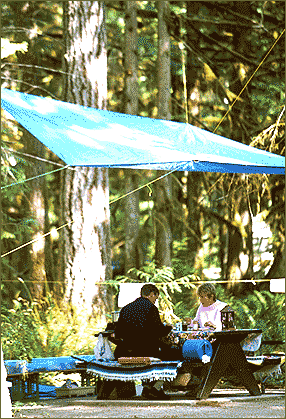
British Columbia's parks, fish and wildlife provide a variety of unique outdoor opportunities for residents and visitors in the form of recreation, camping, angling, hunting and wildlife viewing. The use of these resources by British Columbians and visitors to the province promotes healthy living and an appreciation of B.C.'s landscape, native species and the environment as a whole. The use of campgrounds and purchase of angling and hunting licences contributes to the maintenance and infrastructure of our natural places and to environmental protection and management activities. Several commercial organizations also use these resources, attracting visitors from around the world. This creates jobs within B.C. and contributes significantly to the province's economy. Effective management and use of these resources will ensure their sustainability and promote economic opportunities.
Strategies
Key strategies for this objective include:
- providing outstanding hunting, angling and wildlife viewing opportunities
- developing and implementing outdoor activities and commercial opportunities that reflect client preferences
- maximizing opportunities for partnerships with First Nations, local communities, non profit groups and private land owners
- developing and implementing marketing strategies to promote healthy living through park visitation
Performance Measure
Number of recorded park visits and visitor satisfaction rate
| Performance Measure | 2005/06 Target | 2005/06 Actual | Variance | Target Met? |
|---|---|---|---|---|
| Number of recorded park visits and visitor satisfaction rate | Increase the number of recorded visits to B.C. parks by 20% by 2010 (baseline in 2004/05) | Recorded visits to B.C. parks — 18.0 million | 2010 target | 2010 target |
| Maintain or improve on parks satisfaction survey results based on a 5-year rolling average (80%) | Visitor satisfaction rate — 81% | +1% | Yes | |
| Benchmark/Explanatory Information: | Recorded park visits: The number of recorded visits to B.C. parks was approximately 18.3 million in 2004/05, 19.0 million
in 2003 and approximately 22.6 million in 2002. (Source: Ministry of Environment.) Visitor satisfaction rate: The five-year rolling average for 2004/2005 was approximately 80%, which is based on the Visitor Satisfaction Index rating of the reporting years of 2000/01 to 2004/05. This has been consistent since 1998. (Source: Ministry of Environment.) |
|||
Rationale for the Performance Measure
Recreational services and opportunities provided in provincial parks make an important contribution to local economies, promote healthy living and support an appreciation for the environment by providing an undisturbed area to observe B.C. landscapes and native species. These public, outdoor and economic contributions are an important factor that the ministry considers when determining the level and types of park recreational services and opportunities to provide. A measure of these park contributions is being provided though an estimate of the number of park visitors (measured as the number of recorded visits to provincial parks). The trend in these data should provide a reasonable indication of the trend in the public, outdoor and commercial opportunities from British Columbia's parks.
Additionally, the ministry is the largest supplier of overnight camping accommodation throughout British Columbia. Since 1985, the ministry has monitored the effectiveness of providing services in provincial park campgrounds by conducting an annual satisfaction survey with a random sample of park visitors in these campgrounds (See Appendix F for more information). The results of this survey are used by ministry staff and park facility operators to better assess what services are being provided well and what services require improvements.
In February 2006, the ministry combined two performance measures — the number of recorded visits to B.C. parks and the visitor satisfaction rate with parks and campground facilities. The combination of park visitations and the satisfaction of visitors provides a measure of the contribution of recreational services and opportunities offered in provincial parks to the economy and human health, now and in the future.
Achievements and Key Issues
Number of park visits: The ministry has conducted an extensive quality assurance review of the 2005 park visitation data. For 2005, the quality assurance process showed total recorded visits as 18.0 million. In 2005, camping attendance (which contributes approximately 12% to the total recorded visits) increased 3%; while day use (which contributes approximately 87% to the total recorded visits) declined 2%. Overall, the decline in total recorded visits was approximately 1.3%, significantly less than the decline from 2003 to 2004 of approximately 3.7%.
In an effort to achieve a 20% increase in attendance by 2010, BC Parks is undertaking a number of initiatives aimed at increasing attendance. These initiatives include developing a marketing plan, increasing awareness of the various recreational opportunities in parks, and increasing the range of recreational opportunities available. The ministry expects that these activities and other strategies currently under development will enable us to reach the 2010 performance target.
Over the past few years, the ministry has been streamlining how park recreation is provided. In 2002/03, changes in operational processes included changes to the sampling method used for collecting visitor data. Therefore, current data are not comparable to data reported from before these changes were implemented. The changes have resulted in a lower level of overall recorded visits. A new methodology for deriving data for identifying trends in park visitation from year to year is under development. (See Appendix F for more information about the methodology for this measure.)
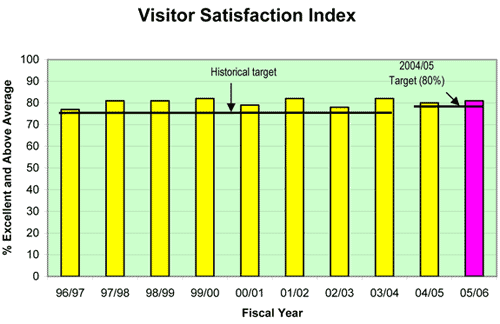
Park satisfaction survey results: In 2005/06, the ministry's park visitor satisfaction index was 81%. The index of visitor satisfaction is an average provincial rating for five services: cleanliness of restrooms, cleanliness of grounds, condition of facilities, a sense of security and control of noise. The rating is based on responses of "excellent" and "above average."
The ministry's target of 80% for 2005/06 was met. One of the services that contributed to the slight increase in the overall index was an increase in the rating of cleanliness of restrooms from 71% in 04/05 to 75% in 05/06. Over the last 10 years, this service has been rated by many park visitors as being very important to their stay in the campground. The ratings for the other four services continued to be similar to the previous year.
The index of visitor satisfaction for the past 10 years is shown in Figure 3. In 2004/05, the index was increased from 75% in previous years to 80% in 2004/05 to reflect recent performance. The measure provides an indication of how effective service improvements have been throughout the past 10 years.
Figure 3. Visitor satisfaction index from 1996/07 to 2005/06
Future Direction
To continue to meet the ministry's target for visitor satisfaction rate and increase the number of visitors to provincial parks by 20% by 2010, the ministry will continue to upgrade facilities to ensure they are safe, clean and operational. Park facility operators will continue to concentrate on services that maintain and improve customer satisfaction, and the ministry will consider innovative ways to address changing demographics and camper demand for high quality recreational opportunities. Implementation of the government's resort strategy and working with communities on the development of key parks and special tourism destinations is also expected to increase park visitation. All of these efforts will ensure that B.C.'s parks provide world class outdoor recreation opportunities and promote healthy living, particularly for visitors who will attend the 2010 Olympic and Paralympic Winter Games.
Performance Measure
Number of basic hunting and angling licences sold
| Performance Measure | 2005/06 Target | 2005/06 Actual | Variance | Target Met? |
|---|---|---|---|---|
| Number of basic hunting and angling licences sold | Increase the number of basic hunting licences sold to 100,000 over the next 10 years (baseline in 2004/05) | Hunting — 83,701 resident 6,131 non-resident |
10-year target (2014 / 15) |
10-year target (2014 / 15) |
| Increase the number of angling licences sold by 30% over the next 10 years (baseline in 2004/05) | Angling — 247,789 resident 65,942 non-resident |
|||
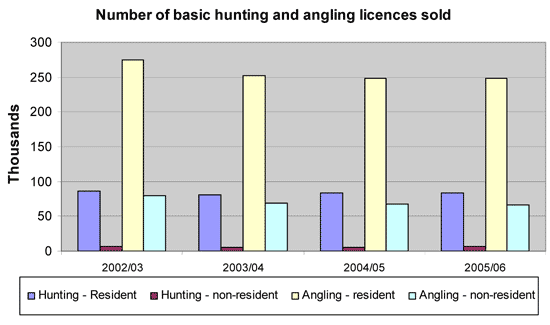
| Benchmark/Explanatory Information: | Hunting and angling licences sold: 2004/05: Hunting — 84,003 resident and 5,931 non-resident; Angling — 248,052 resident; and 68,328 non-resident. 2003/04: Hunting — 81,368 resident and 5,785 non-resident; Angling — 252,867 resident and 69,398 non-resident. 2002/03: Hunting — 85,714 resident and 6,234 non-resident; Angling — 275,430 resident and 79,772 non-resident. (Source: Ministry of Environment.) | |||
Rationale for the Performance Measure
Fish and wildlife recreational services and opportunities are important sources of regional tourism throughout the province. The contribution from these sources is an important factor that the ministry considers when determining the level and types of fish and wildlife recreational services and opportunities to provide. This performance measure currently reports on the actual number of hunters and anglers benefiting from these opportunities in British Columbia. The trend in this data should provide a reasonable indication of any changes in the contribution resulting from fish and wildlife opportunities.
Achievements and Key Issues
In 2005/06, a ministry focus was to ensure the continuance of healthy fish and wildlife populations, which included a number of wildlife inventory and fish stocking projects in every region of the province. Surveying and population modelling for big game species, as well as developing management strategies, were completed and will continue through 2006/07. In partnership with the Freshwater Fisheries Society of B.C., 6.8 million fish were released into 1,062 lakes and streams.
While the total number of basic hunting licenses sold in 2005/06 declined slightly from the previous year (see Figure 4), the number of non-resident basic hunting licenses increased from the previous year, and the number of resident basic hunting licenses declined. The number of angling licenses sold to both residents and non-residents declined slightly. Licence fees were increased in the past few years as a response to the recommendations of the Recreation Stewardship Panel Report, which may be contributing to a short-term decline as residents and non-residents adjust to the new prices. Weather conditions over the last two summers may also be a contributing factor for the decline in the number of anglers.
Figure 4. Number of basic hunting and angling licenses sold from 2002/03 to 2005/06
Future Direction
Economic contribution can be estimated and reported in various ways. With the demographic characteristics of hunters and anglers changing, and increasing pressures placed on fish and wildlife populations, the focus when allocating fish and wildlife resources for recreation purposes is shifting from increasing the number of participants to providing unique opportunities matched to the preferences of participants. With this shift, changes in the number of basic licences sold may no longer provide a good indication of changes in the economic contribution of fish and wildlife recreation.
The ministry has worked with BC Stats to develop an economic model for estimating economic contribution more directly. In 2003, resident and non-resident hunters, anglers and trappers contributed about $161 million (0.13%) to the province's Gross Domestic Product (GDP). These activities also generated employment for approximately 9,770 British Columbians. In the future, the ministry is considering including different performance measures to report on the contributions of hunters, anglers and trappers to the province's GDP and employment. Possible measures are the percentage of the province's GDP contributed by hunters, anglers and trappers, as well as the number of jobs dependent on hunting, angling and trapping activities.
Objective 3
Sustainable and collaborative management and use of marine and ocean resources
British Columbia's marine and ocean resources provide great economic benefits to the citizens of the province. The ministry works in collaboration with the federal government to ensure British Columbia's interests are represented in the governance of ocean and marine resources and that these resources are managed in a sustainable manner.
Strategies
Key strategies for this objective include:
- identifying and advancing provincial objectives as they relate to ocean resources and their use
- influencing implementation of the federal Oceans Strategy on the Pacific coast
- ensuring that federal management and international relations reflect provincial objectives for marine fisheries
- representing B.C.'s interests to ensure the seafood sector's fair share of federal and cross government programs, initiatives and activities to promote research, exports and investment
- undertaking programs and strategies to enhance the competitiveness and sustainability of B.C.'s seafood products in domestic and export markets
Performance Measure
Number of marine-based commercial and recreational fisheries
managed through a collaborative decision-making process
| Performance Measure | 2006/07 Target | 2006/07 Actual | Variance | Target Met? |
|---|---|---|---|---|
| Number of marine-based commercial and recreational fisheries managed through a collaborative decision-making process | 1 additional/year – 4 fisheries (total) |
N/A — New performance measure — to be reported on in the 2006/07 Annual Service Plan Report | N/A | N/A |
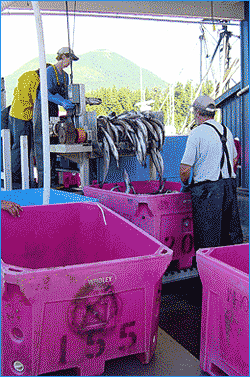
| Benchmark/Explanatory Information: | The three fisheries managed through a collaborative decision-making process in the 2004/05 baseline data are hake, herring and tuna. | |||
 Rationale for the Performance Measure
This is a new performance measure as of February 2006. Economic sustainability is dependent on the level and certainty of access to resources. Measuring the increase in the number of B.C. marine fisheries that are managed collaboratively and include provincial government participation will determine if B.C.'s interests concerning fair allocation and certainty of access to resources are represented.
Goal 5
A high performance organization
A high performance organization is reflected in its leadership, people, corporate operating systems, culture and the services it provides. It is flexible, able to adapt to situations and events, and is responsive to the needs of its clients. A high performance organization provides a challenging and healthy working environment to staff, promotes learning and is committed to continuous improvement.
Core business areas: Environmental Stewardship, Water Stewardship, Environmental Protection, Oceans and Marine Fisheries, Compliance and Executive and Support Services.
 Objective 1
A client-focused organization
A client-focused organization strives to identify and develop ways to continuously improve client service. The ministry anticipates what its clients — the citizens, organizations and businesses of British Columbia — will need and how best to meet those needs through responsive staff, effective programs, policy, legislation, decision-making and timely information systems.
Strategies
Key strategies for this objective include:
- fostering positive relationships with clients
- identifying and implementing continuous improvements to client business processes
Performance Measure
Changes in satisfaction of client groups
| Performance Measure | 2006/07 Target | 2006/07 Actual | Variance | Target Met? |
|---|---|---|---|---|
| Changes in satisfaction of client groups | Baseline data to be collected in 2006/07 | N/A — New performance measure — to be reported on in the 2006/07 Annual Service Plan Report | N/A | N/A |
| Benchmark/Explanatory Information: | Currently, the ministry administers several client satisfaction surveys, including the parks satisfaction survey and hunter and angler satisfaction surveys. The survey intended to provide data for this measure will be in addition to the surveys currently administered by the ministry. | |||
Rationale for the Performance Measure
This is a new performance measure as of February 2006. Ensuring client groups are satisfied with the services and working relationships with the ministry is important. Over the coming year, the ministry will be designing and administering a baseline survey of targeted clients. This baseline will provide a starting point from which changes in client satisfaction will be tracked over the coming years.
Objective 2
A healthy working environment that motivates and supports staff, promotes innovation, and attracts and retains high performance employees
The ministry strives to ensure that it is a sought-after, well-respected and innovative place to work. Recognizing that a challenging and balanced work environment is essential for good health and a productive workforce, the ministry recognizes staff for their contributions, supports their work with appropriate resources, and encourages professional development opportunities and health and wellness activities.
Strategies
Key strategies for this objective include:
- updating and implementing the ministry's human resources strategy
- optimizing performance by providing developmental opportunities, recognition and reward initiatives
- advancing the development of a knowledgeable and skilled workforce
- fostering a supportive workplace culture through leadership, health promotion and social relationships
Objective 3
A coordinated approach to legislation, policy, resource allocation and compliance
Leadership and a coordinated approach to legislation and policy development, resource allocation and compliance and enforcement services is essential to ensuring cross ministry consistency, effective and efficient program delivery and the realization of ministry goals. The ministry works across core business areas to support goals and objectives, improve outcomes, identify risks and focus on ministry and government priorities.
Strategies
Key strategies for this objective include:
- providing a legislative and policy framework that supports ministry goals
- leading and managing the deployment of effective and efficient shared services
- providing leadership and service in support of a strategic ministry compliance approach and maintaining strong and effective compliance and enforcement services
Objective 4
An integrated approach to ministry planning, performance management
and evaluation
The ministry undertakes an integrated cross ministry approach to strategic, service and business planning, reporting, program evaluation and performance management, ensuring all planning activities reflect the ministry's goals and objectives.
Strategies
Key strategies for this objective include:
- facilitating a strategic and integrated approach to ministry planning and performance management
- providing tools, guidelines, expertise and support for effective business planning and program evaluation
Objective 5
Accurate, timely information
The effective and efficient sharing of accurate, timely information is an essential component of a high performance organization. Well-managed, accurate and accessible information is critical to making informed environmental management decisions and meeting the service needs of British Columbians.
Strategies
Key strategies for this objective include:
- developing information resources to produce optimum results
- pursuing opportunities to maximize the use of technology and best practices in the management of business applications and information resources
Deregulation
The Ministry of Environment has undertaken significant deregulation and regulatory reform initiatives that aim to ensure British Columbia's regulatory climate enables strong economic growth while maintaining effective environmental standards.
Regulatory reform has been and will continue to be undertaken under each core business area as the Ministry of Environment pursues its shift from a prescriptive to a results-based approach to regulation. For example, the implementation of new regulations and codes of practice under the Environmental Management Act and Integrated Pest Management Act will reduce regulatory burden, clarify responsibilities and make more efficient use of ministry resources.
Another three-year plan for regulatory reform has been introduced by the government. The ministry will support this initiative by committing to controlling regulatory burden and improving regulatory quality. The cross government target of a zero per cent increase in regulations will be maintained through 2008/09. Over the next three years, the ministry will continue its review of legislation and regulations (e.g., the Wildlife Act) and look for opportunities that will shift the ministry's regulations to be more citizen-centred, cost effective, results-based and responsive to our clients by reducing and/or streamlining the steps or processes involved in complying with ministry regulations.