




Goals, Objectives, Strategies, and
Performance Measures
Ministry Goal 1
Clients who are able to work become self-reliant through employment.
Core Business Areas: Employment Programs, Temporary Assistance and
Executive and Support Services.
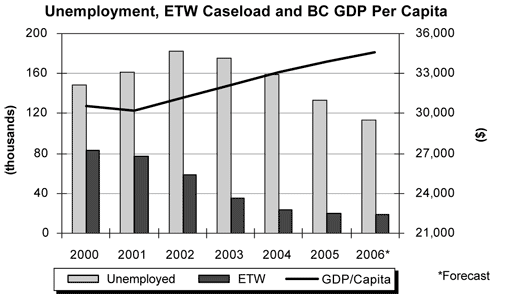
For those clients able to work, the ministry continued to focus upon improving their capacity and progress along the employment continuum to avoid entanglement in a cycle of dependency. Over the course of the last year, the ministry's Expected to Work caseload decreased by 5,200 due in large part to ministry policies and programs that emphasized financial independence and participation in the revived provincial economy and strengthened local labour markets.
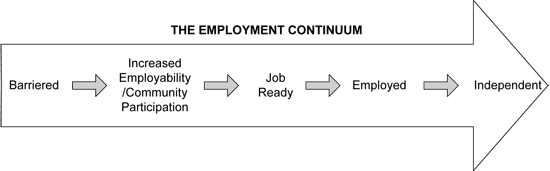
In 2005/06, the ministry invested more than $91 million in employment programming supports to provide clients with work search assistance, employment planning assistance, specific skills training, job placement and job retention services. These programs and services are intended to assist clients move along the employment continuum towards independence as shown below:
In rural areas with limited access to employment supports, the ministry provided transportation, work-clothing and certification fee assistance to ensure all eligible clients were fully supported in seeking employment to address potential program gaps. In 2005/06, 6,900 clients were assisted to find employment, particularly in the hospitality and construction industries, bringing the total number of job placements to more than 47,000 since 2001. Clients successfully completing employment programs earned an average starting wage of almost $11 per hour.
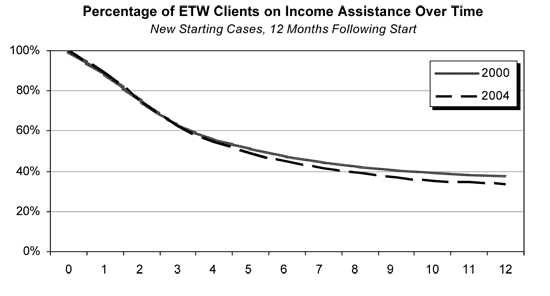
The ministry's focus on assisting clients to transition back to employment as quickly as possible was successful as 50 per cent of Expected to Work clients left assistance within 4 months. Their attachment to the workforce and financial independence profoundly improves their lives and those of their family. Research has found that children raised in income assistance-dependent families are 70 per cent more likely to require income assistance in their lifetime than are children raised in financially independent families. Significant progress has been made. In 2001/02, 1 in 10 children in the province were on the ministry's caseload. By 2005/06, that number had fallen to 1 in 30.
Ministry Employment Programming Facts:
- Placed 47,000 clients in jobs through service providers since 2001.
- Clients successfully leaving the programs enjoy an average starting wage of almost $11 per hour — 40% more than minimum wage.
- Hospitality and construction industries attract many former clients.
- 50% of Expected to Work clients leave assistance within 4 months.
The ministry delivered a series of Outreach Programs to bring ministry services to those in need who had difficulty accessing services. These programs connected those in need with a network of support programs and services offered by the ministry, other ministry partners, other levels of government, and community social service providers. One-time funding was provided to actively seek out potential clients from Vancouver's Downtown Eastside, Victoria, Nanaimo, the Comox Valley, Chilliwack, Abbotsford, the Tri-Cities, and Kamloops.
Between October 2005 and the end of March 2006, the Vancouver Downtown Eastside Outreach Program assisted 113 individuals access housing, income assistance, and medical treatment.
Objectives
1. Clients actively seek work.
During 2005/06, 56,700 employable clients in need were provided with Temporary Assistance. As a condition of their eligibility, they were required to establish and adhere to individualized employment plans designed to assist them transition back to work. Of these, 25,700 clients were exempt from, or had limited employment-related obligations because they had circumstances that limited their ability to seek work — such as parenting a young child or experiencing a temporary illness or injury requiring medical treatment.
The Expected to Work caseload declined by 17.5 per cent in 2005/06 due to a very strong economy, labour market and ministry policies and programs which support clients in finding employment. Since 2001, ministry programs have successfully helped over 47,000 clients find jobs. Clients who leave income assistance for jobs tend to have higher incomes and their children are less likely to receive income assistance when they become adults. Children whose parents work are also more likely to complete high school, attain higher levels of training and education, and be actively involved in the labour market when they reach adulthood.
Strategies
1. Applicants are required to undertake a three-week, self-directed work search as a condition of eligibility.
Income assistance is intended to be a program of last resort for those in genuine need. The three-week work search emphasizes personal responsibility and ensures that applicants pursue employment and other resources before receiving assistance.
In 2005/06, 58 per cent of applicants were exempt from conducting the three-week work search and received assistance on a priority basis. Applicants are not required to conduct the three-week work search if they are:
- Individuals fleeing from an abusive spouse or relative;
- Over the age of 65 years;
- Legally not allowed to work in Canada;
- Afflicted with a physical or mental condition that precludes the person from completing a search for employment; or
- In immediate need of food, shelter or medical attention.
2. Clients with employment-related obligations are required to complete and comply with employment plans as a condition of eligibility.
Employment plans are the foundation for ongoing dialogue and planning between ministry staff and clients. These plans provide clients with access to the tools and supports required to find a job and become independent of income assistance based on each client's unique strengths and skills. The plans outline employment objectives for clients and clearly identify interventions, expected outcomes, and compliance requirements. During 2005/06, more than 90 per cent of Expected to Work clients had the support of personalized employment plans, which are reviewed and updated on a regular basis.
Performance Measures1
| Performance Measure | Client Group | 2004/05 Actual | 2005/06 Target | 2005/06 Actual | Variance | Target Met? |
|---|---|---|---|---|---|---|
| 1.1 Percentage of B.C.'s population aged 19 – 64 receiving Temporary Assistance with employment-related obligations. | Total | 1.2% | 1.2% | 1.0% | -0.2% |  |
| ETW | 0.9% | 0.9% | 0.7% | -0.2% | |
|
| ETW-MC | 0.3% | 0.3% | 0.3% | 0.0% |  |
| Effective April 2004, the category of clients the ministry defined as "expected to work and have a medical condition" (ETW-MC) have employment-related obligations. The actuals and targets above have been adjusted to reflect inclusion of this client designation. | |
| Source: Research, Evaluation and Statistics Branch, Ministry of Employment and Income Assistance. |
|
|
|
| 1 | Methodologies specific to each performance measure can be found on the ministry's website at http://www.eia.gov.bc.ca/publicat/REPORTS/annrpts.htm. |
Measure 1.1 tracks the percentage of British Columbia's working age population receiving Temporary Assistance. A lower percentage indicates that fewer people are in need of assistance and more are contributing to a strong and vibrant provincial economy.
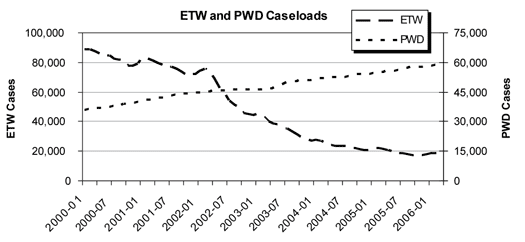
The percentage of British Columbia's able-to-work population receiving income assistance has declined by more than 70 per cent since 2001/02. In 2005/06, there were even fewer cases than had been projected, which, paired with the ministry's continued success at helping clients find employment, resulted in a surpassed target.
| Performance Measure | 2004/05 Actual | 2005/06 Target | 2005/06 Actual | Variance | Target Met? |
|---|---|---|---|---|---|
| 1.2 Average percentage of clients with employment-related obligations who leave the caseload each month. | 10.7% | 9.9% | 10.2% | 0.3% | |
| Source: Research, Evaluation and Statistics Branch, Ministry of Employment and Income Assistance. |
Measure 1.2 gauges the success of clients achieving financial independence. Results were impacted by readily employable clients continuing to find work while clients with additional challenges to employment, who are not as job ready and require specialized supports and assistance, formed a larger proportion of the caseload. The ministry has undertaken a comprehensive redesign of its employment programming during the past year in direct response to this identified client need.
The following chart shows that less than half of ministry clients with employment obligations stay on the caseload longer than 4 months.
Ministry Goal 2
Clients increase their independence through employment, volunteer, and income assistance programs.
Core Business Areas: Disability Assistance, Employment Programs and Executive and Support Services.
The substantial decline in the number of clients who are expected to work was offset by an increased number of clients with restrictions to their daily living. Income and Disability Assistance legislation and ministry policies recognize that those managing significant health issues — Persons with Disabilities — face unique challenges in daily living and may require additional support. In response to this need, clients receiving Disability Assistance are eligible for:
- The highest rates of assistance in the province — the third-highest in Canada;
- Earnings exemptions of $500 per month for individuals and $750 for two-recipient families; increased from $400;
- Medical coverage which includes Medical Services Plan and Pharmacare coverage with no deductible;
- Health supplements;
- Subsidized annual bus pass;
- Community Volunteer Supplement to assist with the costs associated with volunteer activities; and
- Specialized employment programming.
The ministry's emphasis on supporting those most in need was reflected in the addition of 3,800 new Persons with Disabilities (PWD) on the ministry's caseload. PWD clients now represent 55 per cent of the ministry's total caseload and 43 per cent of total operating expenditures.
B.C. provides the third-highest rate of assistance for persons with disabilities in Canada
Objectives
1. Persons with Disabilities who seek work, find employment, and Persons with Disabilities who seek to volunteer are placed in volunteer positions.
In April 2002, the ministry introduced the Employment Strategy for Persons with Disabilities (ESPD). The strategy includes the Employment Program for Persons with Disabilities (EPPD), as well as the Minister's Council on Employment for Persons with Disabilities. Both of these initiatives support persons with disabilities as they enhance their employability and engage in employment to the greatest degree possible; this may include full or part-time work, or volunteering. In 2005/06, the ministry continued to provide pre-employment services, assisted job search, job coaching, job placement, follow-up services, and assistance with starting a business for disabled clients.
Volunteering is a valuable activity for many clients who are receiving Disability Assistance and are not able to support themselves through employment. Community work may lead to employment, as it often provides valuable skills and experience. It is also an opportunity for clients to contribute to their communities.
Strategies
1. Employment services and related supports are provided to Persons with Disabilities to enhance their self-reliance.
In addition to its network of Disability Assistance and employment, health and transportation supports, the ministry partnered with the federal government to pilot a streamlined application process for clients eligible for Canada Pension Plan Disability (CPPD) benefits. Clients received assistance from ministry staff in completing the necessary forms, which accelerated the adjudication process. Clients participating in the pilot had a higher successful application rate for CPPD, which provided them with:
- CPPD benefits that contribute to higher CPP retirement benefits at age 65;
- Rates of assistance that meet or exceed provincial assistance; and
- Continued access to ministry health supplements.
In response to the positive feedback from clients, this pilot will be expanded in 2006/07 to provide all eligible clients with assistance accessing their full federal entitlements.
The ministry also contributed $15 million to the 20th Anniversary of the Rick Hansen Man in Motion Tour to improve the lives of people with spinal cord injuries.
B.C. is the only province to provide a subsidized provincial bus pass for persons with disabilities
Performance Measures
| Performance Measure | 2004/05 Actual | 2005/06 Target | 2005/06 Actual | Variance | Target Met? |
|---|---|---|---|---|---|
| 2.1 Percentage of B.C.'s population receiving income assistance. | 3.6% | 3.7% | 3.3% | -0.4% | |
| Source: Research, Evaluation and Statistics Branch, Ministry of Employment and Income Assistance. |
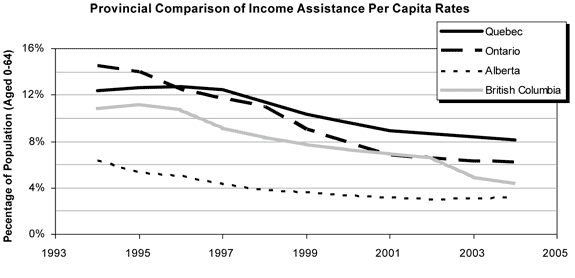
Measure 2.1 shows the overall percentage of the provincial population that is receiving income assistance. A lower percentage indicates a decreasing proportion of the provincial population is dependent on income assistance. The percentage of the provincial population receiving income assistance was lower than had been expected for 2005/06. A number of factors have contributed to this result, including continued growth in B.C.'s economy and the delivery of ministry programs that move clients towards independence.
| Performance Measure | 2004/05 Actual | 2005/06 Target | 2005/06 Actual | Variance | Target Met? |
|---|---|---|---|---|---|
| 2.2 Percentage of total caseload receiving Disability Assistance. | 49.8% | 53.6% | 55.6% | 2.0% | |
| Source: Research, Evaluation and Statistics Branch, Ministry of Employment and Income Assistance. |
Measure 2.2 tracks the percentage of the total caseload receiving Disability Assistance. Results indicate a continued growth in this measure. As the number of clients receiving Temporary Assistance declines (i.e., demonstrating success in finding employment), the proportion receiving Disability Assistance will grow. The number of Persons with Disabilities requiring assistance has also continued to grow due in part to an aging population, longer life expectancy for individuals experiencing significant health issues, and the impact of new illnesses and conditions, which also contributes to this result.
| Performance Measure | 2004/05 Actual | 2005/06 Target | 2005/06 Actual | Variance | Target Met? |
|---|---|---|---|---|---|
| 2.3 Percentage of persons receiving Disability Assistance who declare income from working or receive volunteer supplements. | 15.1% | 15.0% | 15.7% | 0.7% | |
| Source: Research, Evaluation and Statistics Branch, Ministry of Employment and Income Assistance. |
This measure provides a conservative count of volunteer activity, as the result only tracks those who report volunteering activities. There is a substantial amount of additional volunteer activity that the ministry is unable to measure. Results show a continued increase in the percentage of Disability Assistance clients who either had employment income or received volunteer supplements.
Through ministry employment services, 75 PWD clients found full-time jobs, 119 found part-time jobs, and 12 became self-employed in 2005/06. 120 clients received referrals to other services such as training and post-secondary education. 87 clients found volunteer positions. Based on positive feedback from clients, other stakeholders, and the success of this performance measure, the ministry is increasing funding for the Community Volunteer Supplement in 2006/07 to address the growing number of interested clients. In future years, the ministry anticipates continued increases in Measure 2.3.
Ministry Goal 3
Clients receive supplementary assistance for health and transportation needs.
Core Business Area: Supplementary Assistance and Executive and Support Services.
The ministry provides a range of supplementary assistance designed to meet the health and transportation needs of clients. This assistance includes confirmed job supplements, health assistance, Senior's Supplement, bus passes and travel assistance, and user fees for continuing care, alcohol and drug facilities. The ministry spent $205 million on Supplementary Assistance in the 2005/06 fiscal year.
Vancouver is the most accessible city in the world for Persons with Disabilities
Objectives
1. Clients receive health care supports in a timely manner.
Ministry clients with special health care needs frequently require equipment, supplements, and supports tailored to their specific requirements. Their ability to access these resources in a timely manner assists them in improving their quality of life, ability to find employment and participation in the community. The ministry began working on service standards and reviewed its business processes to improve timeliness and access to services through enhancing systems and streamlining the workload required to access services.
Performance Measures
| Performance Measure | 2004/05 Actual | 2005/06 Target | 2005/06 Actual | Variance | Target Met? |
|---|---|---|---|---|---|
| 3.1 Average number of working days required for the adjudication of short-term nutritional supplement requests. | N/A | Establish Baseline | 5 days | N/A | |
| Source: Health Assistance Branch, Ministry of Employment and Income Assistance. |
Measure 3.1 evaluates the ministry's performance in the review and adjudication of requests for short-term nutritional supplements provided by the ministry. Nutritional supplements are critical to the wellbeing of vulnerable clients, including infants and Persons with Disabilities. On average, the ministry processed nutritional adjudication requests within five working days establishing a new baseline for this target. This result demonstrates staff's commitment to ensuring clients receive a timely response and positive outcomes.
Ministry Goal 4
Individuals have access to a fair and timely reconsideration process.
Core Business Area: Employment and Assistance Appeal Tribunal and Executive and Support Services.
The ministry is committed to openness and transparency in its delivery of services to clients. All clients are informed of their rights to request a reconsideration of ministry decisions that affect their application for services. Clients dissatisfied with a decision may request an internal assessment or 'second look' by Reconsideration Adjudicators within the ministry who are removed from the initial determination.
The BC Employment and Assistance appeal system ensures unbiased, fair, timely, and transparent decision-making for clients. The Employment and Assistance Appeal Tribunal operates under the authority of the Employment and Assistance Act and the Employment and Assistance for Persons with Disabilities Act. The mission of the Employment and Assistance Appeal Tribunal is to provide an accessible appeal process that delivers timely and fair decisions. The Appeal Tribunal is structured as an independent public body to ensure unbiased, fair and transparent decision-making. The Appeal Tribunal's Chair and Vice-Chairs are appointed by the Lieutenant Governor, and the Appeal Tribunal members are recruited throughout the province and appointed by the Minister. Appeal hearings occur throughout the province. Although most hearings are in-person, the appeals may also occur by teleconference, or, if both parties agree, through written submission to the Appeal Tribunal. This flexibility ensures all clients have access to the appeal process, regardless of where they reside.
Objectives
1. Reconsideration issues are efficiently resolved.
2. Decisions are made on appeals and parties notified within the statutory timelines.
Adjudication of health decisions represents a large and growing proportion of the reconsideration requests that the ministry undertakes annually. Health reconsiderations assess issues specific to individuals, such as their eligibility for a Persons with Disability (PWD) designation, or requests for medical equipment, supplies, and supports. The number of PWD reconsiderations increased by 33 per cent in 2005/06. Health reconsiderations are often complex, requiring additional medical evidence to be submitted by professionals and detailed examination of all case materials.
Strategies
1. The efficient processing of requests for reconsideration is monitored and, when necessary, procedures are amended to ensure reconsideration timelines are within statutory requirements.
2. The efficient processing of appeals is monitored and procedures are amended, when required, to ensure appeal timelines are within statutory requirements.
Performance Measures
| Performance Measure | 2004/05 Actual | 2005/06 Target | 2005/06 Actual | Variance | Target Met? |
|---|---|---|---|---|---|
| 4.1 Percentage of reconsideration decisions that are made within ten business days. | 79.7% | 87% | 69% | -18% |  |
| Source: Health Reconsiderations Branch, Ministry of Employment and Income Assistance. |
Due to an increase in the number of complex cases this year, reconsideration decisions took longer than last year, on average. In response to this identified requirement, the ministry began to streamline the health reconsiderations process and dedicated more staff to processing health reconsiderations in order to mitigate the impacts and complexities associated with the growing health reconsiderations caseload. On average, the ministry made all of its reconsideration decisions within 11 days.
| Performance Measure | 2004/05 Actual | 2005/06 Target | 2005/06 Actual | Variance | Target Met? |
|---|---|---|---|---|---|
| 4.2 Percentage of appeals commenced within the 15-business day statutory limit. | 100% | 100% | 100% | 0% | |
| Source: Employment and Assistance Appeal Tribunal |
Measure 4.2 tracks the percentage of appeal hearings commenced within the 15-day statutory time limit as set out in the Employment and Assistance Regulation.